

Want your agent to do this with you? Send this article to your own AI agent and say, "Walk me through this tutorial." You check the preview and say when the page goes live, and your agent handles the build.
Your landing page at a glance
Your agent builds an ecommerce landing page from a design comp, on a page shoppers cannot open until you say so. Each section has a Technical details box for anyone who wants the commands.
- Give your agent the design comp.
- Paste the prompt into your agent.
- Check the private preview on desktop and phone.
- Say go, and your agent makes the page visible.
For Cinderhouse Coffee, it took 7 minutes from the agent's first command to the saved page.
Technical details
The path in commands, on storefront 184481:
uc-storefront sf pages create /cold-brew-kit/ --storefront 184481 --template template_page.vm --item-template template_item.vm --title "Cold Brew Kit" --page-type S --hidden --noindex --live
uc-storefront sf ids --storefront 184481 --count 200
uc-storefront cjson init body.cjson
uc-storefront cjson apply body.cjson --plan 01-landing.json
uc-storefront sf preview start --storefront 184481
uc-storefront sf preview stage --storefront 184481 --session <session> --file body.cjson=/cold-brew-kit/body.cjson
uc-storefront sf push body.cjson --storefront 184481 --to /cold-brew-kit/body.cjson --create --live --dry-run
uc-storefront sf push body.cjson --storefront 184481 --to /cold-brew-kit/body.cjson --create --live
uc-storefront sf pages settings show.json --storefront 184481 --path /cold-brew-kit/ --live
What you need
- Your store folder from tutorial 1, where you set up your store for an AI agent.
- A design comp of the page. A desktop picture is enough to start.
- The products on the page, already in your catalog with their photos and prices.
Already selling? The new page wears your live theme, so it gets the header, footer, colors and fonts your shoppers already see. Nothing else on your store changes.
Starting fresh? Add the Skeleton starter theme and brand it first. Cinderhouse did that in tutorial 2, where its agent built the header and mega menu from a comp.
Technical details
A page body is shared by every theme, so the page shows in whichever theme is active. Your agent can list your themes and say which one that is.
uc-storefront sf themes --storefront 184481

themes for storefront 184481: 2 of 5
216611	Skeleton	inactive	/themes/Skeleton/	version 1.02	merge conflicts: 0	ok to activate: yes
216631	Skeleton	active	/themes/skeleton-0/	version 1.02	merge conflicts: 0	ok to activate: yes
Why the page starts hidden
A theme change can wait on an inactive copy until you activate it. A page cannot. A page has no draft copy, so its content is live the moment it is saved.
So your agent creates the page hidden. A hidden page exists, but a shopper who tries its address gets "not found". Your agent builds and previews it while it is hidden, and you choose the moment it appears.
The prompt also keeps the page out of search engines. That suits a promo landing page you plan to link from an email or an ad.
Technical details
Creating a page is a live change, so the command is refused until it says so. With --hidden, the page "answers 404 until shown", in the words of the command's help. --noindex leaves it out of the sitemap and serves it with an X-Robots-Tag: noindex header. The receipt, trimmed to the settings:
uc-storefront sf pages create /cold-brew-kit/ --storefront 184481 --template template_page.vm --item-template template_item.vm --title "Cold Brew Kit" --page-type S --hidden --noindex

error: Page data is shared by every theme. Pass --live to acknowledge this live write.

uc-storefront sf pages create /cold-brew-kit/ ... --hidden --noindex --live

    "catalog_group_oid": 690603,
    "exclude_from_sitemap": true,
    "group_template": "template_page.vm",
    "item_template": "template_item.vm",
    "page_type": "S",
    "path": "/cold-brew-kit/",
    "title": "Cold Brew Kit",
    "visible": false,
    "search": "noindex"
The pages and themes page covers creating, hiding and moving pages.
Give your agent the comp
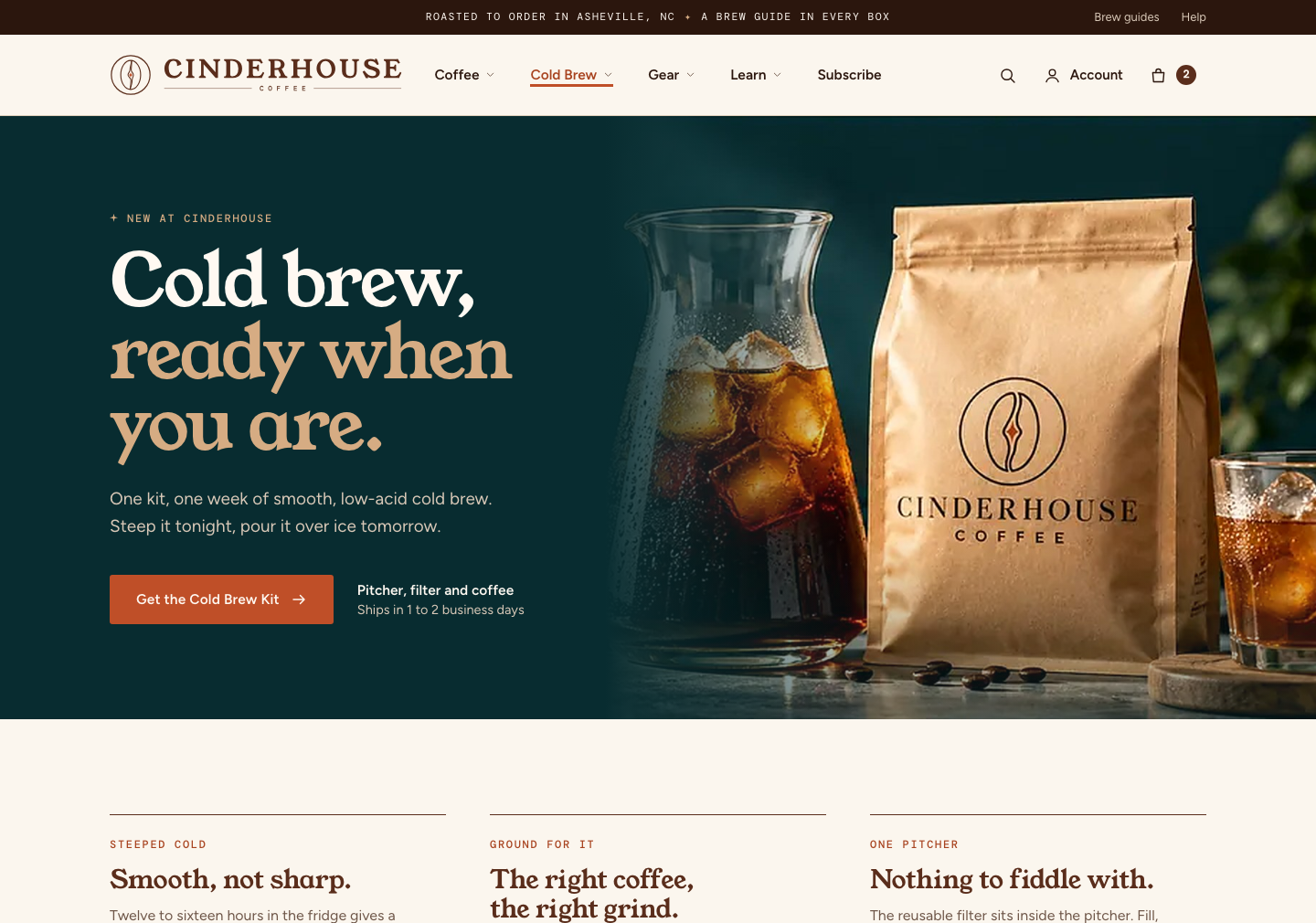
A comp is a picture of the finished page. It shows your agent the order of the sections, the words and where the buy button sits, so it can measure its work against yours instead of guessing.
Attach the picture to your message, or drop it in your store folder so your agent can find it again. Start with the desktop comp. For phones, add a phone comp or ask your agent to work out the mobile layout from the desktop design.
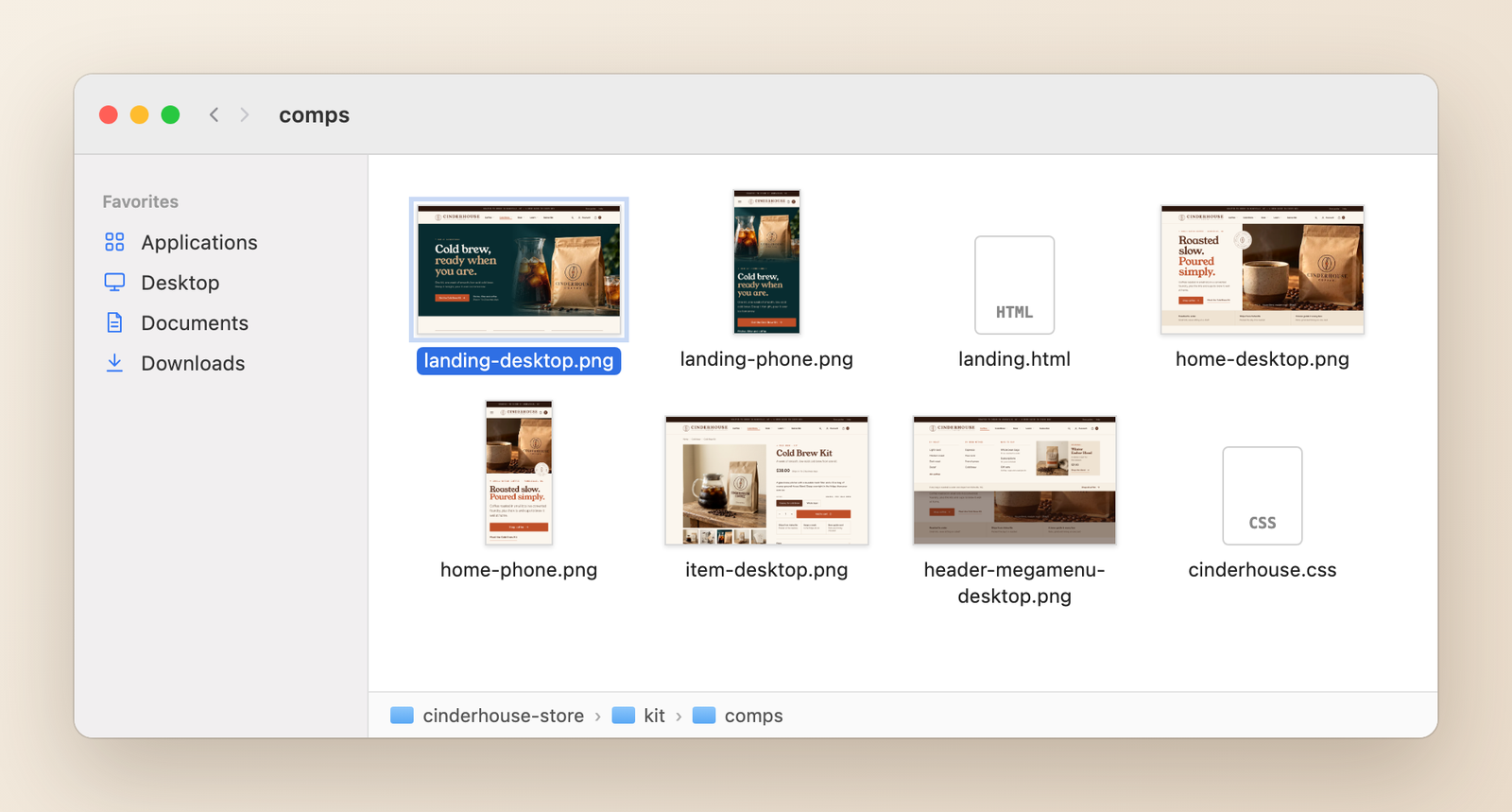
Following along with Cinderhouse? Download the Cinderhouse starter kit (zip, 7 MB), unzip it into your store folder and rename the new folder kit. The landing page comp sits in kit/comps.
Technical details
The files this build reads:
kit/
  brand.md               palette, type and shape rules
  comps/
    landing.html
    landing-desktop.png
    landing-phone.png
    cinderhouse.css
In the starter kit download, the comp pictures are JPEG files with the same names.
The landing page prompt
Paste this into your agent from your store folder. Change the page address to yours.
The comp for my Cold Brew Kit landing page is in kit/comps, and my brand notes are in kit. Build it as a new page on my store at /cold-brew-kit/. Create the page hidden and out of search, so shoppers can't see it while you work. The kit, its price and the add-on products must come from my real catalog. Show me a preview at desktop and phone width, and the dry run, before you save anything. Don't touch my theme, menus, items or any other page, and don't make the page visible until I say so.If you attached the comp instead, start with "Here is the comp for my landing page." A good reply names the page it will create, confirms it will be hidden and lists any product in the comp that it cannot find in your catalog.
Technical details
The full Cinderhouse prompt. Change the storefront number, page address, item IDs and file names to yours.
Build the Cold Brew Kit landing page from the comp in kit/comps/landing.html. The pictures are landing-desktop.png and landing-phone.png. Use the uc-storefront command line tool and its skill.

Where to work
My storefront is 184481. Make a new page at /cold-brew-kit/ with the title "Cold Brew Kit". Create it hidden and kept out of search engines, so it answers "not found" to shoppers until I say it is ready. Use the same page template as my other content pages and tell me which one you chose.
A page body belongs to no theme, so saving it is live. That is why the page stays hidden. Stage the body in a preview and show me desktop and phone width before you save it. The page wears my live theme (header, footer, colors and fonts), so preview it on the active theme.
Do not change my theme files, menus, site settings, items or any other page.

What the page should look like
Follow the comp from top to bottom: a deep teal hero with the launch photo and one ember button, three benefits, "Three steps. One night.", "In the box" with the kit photo, the four things in the box, the price and an add to cart button, an "Add to the kit" row of three products, four questions and answers, and a teal closer with the seal.
The Cold Brew Kit (CH-COLDBREW) and the three add-ons (CH-FILTERS, CH-HOUSEBLEND-GR, CH-GIFTSET) must come from my real catalog: name, photo, price and link from the item itself. Never type a price.
The header and footer come from the theme, so build only the part between them.
Shape and color rules are in kit/brand.md: 3 px corners, no pills, cream and oat backgrounds, teal only for cold brew, one ember button per screen. Take the copy from the comp. No ratings, reviews, discounts or coupon wording.
Upload any picture the page needs that is not already on my store, and tell me each file and where it went.

How to finish
Compare the preview with the comp, fix what differs, and tell me plainly what still does not match.
Show me the dry run, then save the body to the hidden page. Check that a shopper still gets "not found".
When I say it is ready, make the page visible and check it the way a shopper would. Leave it out of search engines unless I ask.
What the agent does
You watch, answer questions and look at previews. Cinderhouse's agent:
- Checked the catalog for the kit and the three add-ons.
- Created the page hidden and out of search.
- Uploaded two pictures: the hero photo and the seal.
- Built the page in one pass: hero, benefits, steps, what is in the box, add-ons, questions and a closer.
- Previewed it and fixed what differed in two rounds.
- Showed the list of changes and saved the page, still hidden.
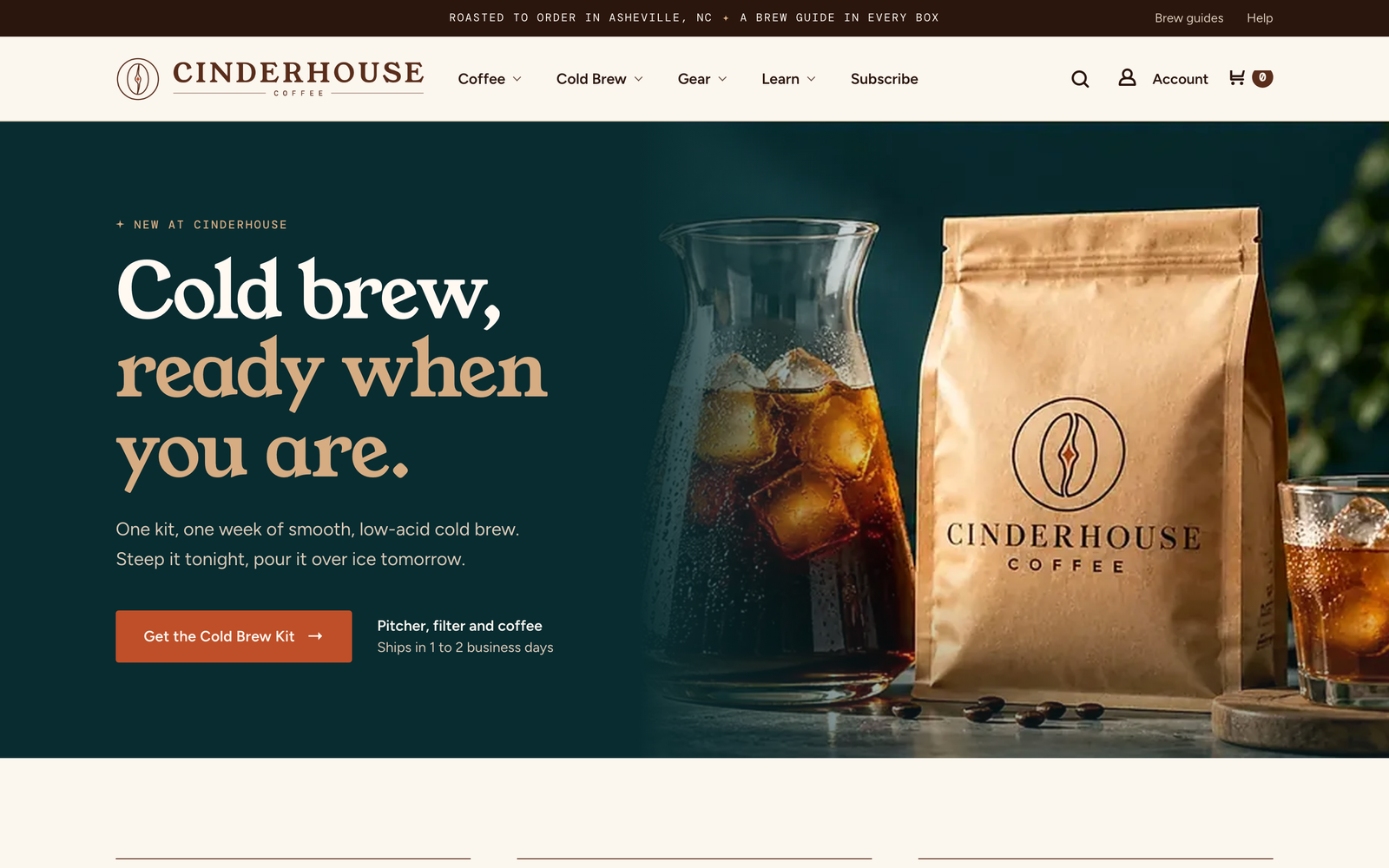
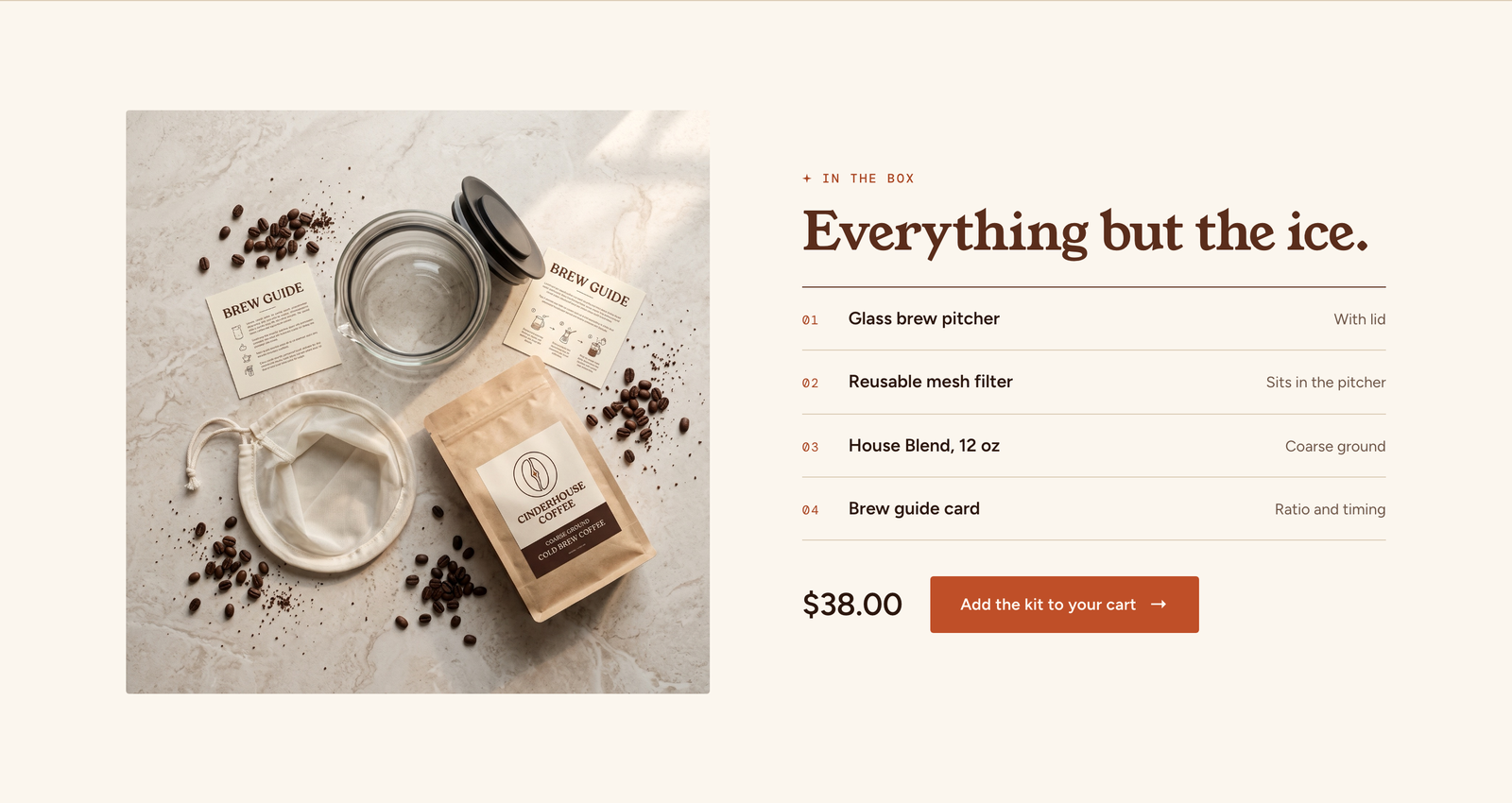
The kit's photo, name, price and add to cart button all come from the item itself, so the page stays right when the catalog changes.
Technical details
The agent reserves real widget IDs, builds the page body as one local file (121 operations here) and stages it in a preview. Saving a page body is refused without --live, because it has no draft copy. The local editing workflow covers each step. The dry run and the save, trimmed:
uc-storefront sf push body.cjson --storefront 184481 --to /cold-brew-kit/body.cjson --create --dry-run

BLOCKED This destination is outside every theme, so it is live content with no draft copy; the push requires --live and publish permission.

uc-storefront sf push body.cjson --storefront 184481 --to /cold-brew-kit/body.cjson --create --live --dry-run

Dry run: /cold-brew-kit/body.cjson; would write; live=true; conflict=false
Delta: 122 added, 0 removed, 0 changed

uc-storefront sf push body.cjson --storefront 184481 --to /cold-brew-kit/body.cjson --create --live

Pushed /cold-brew-kit/body.cjson; version=1; recoveredViaReadback=false
Check the landing page preview
Your agent opens a private preview of the real page, with your header and footer around it, while the page is still hidden. Look at it the way a shopper would:
- On desktop, scroll from the hero to the last button.
- On a phone, check that each section stacks in a sensible order.
- Click add to cart and check the cart shows the right product at the right price.
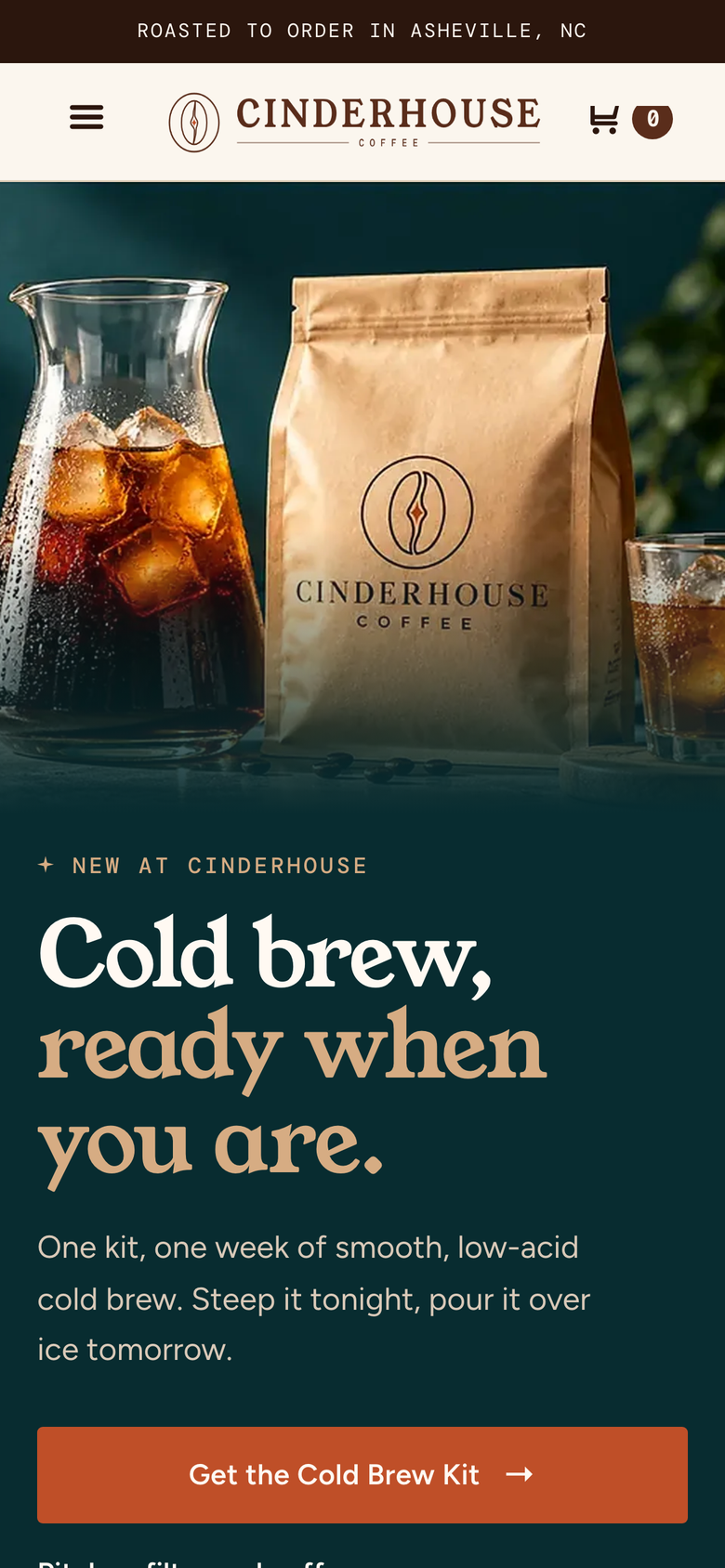
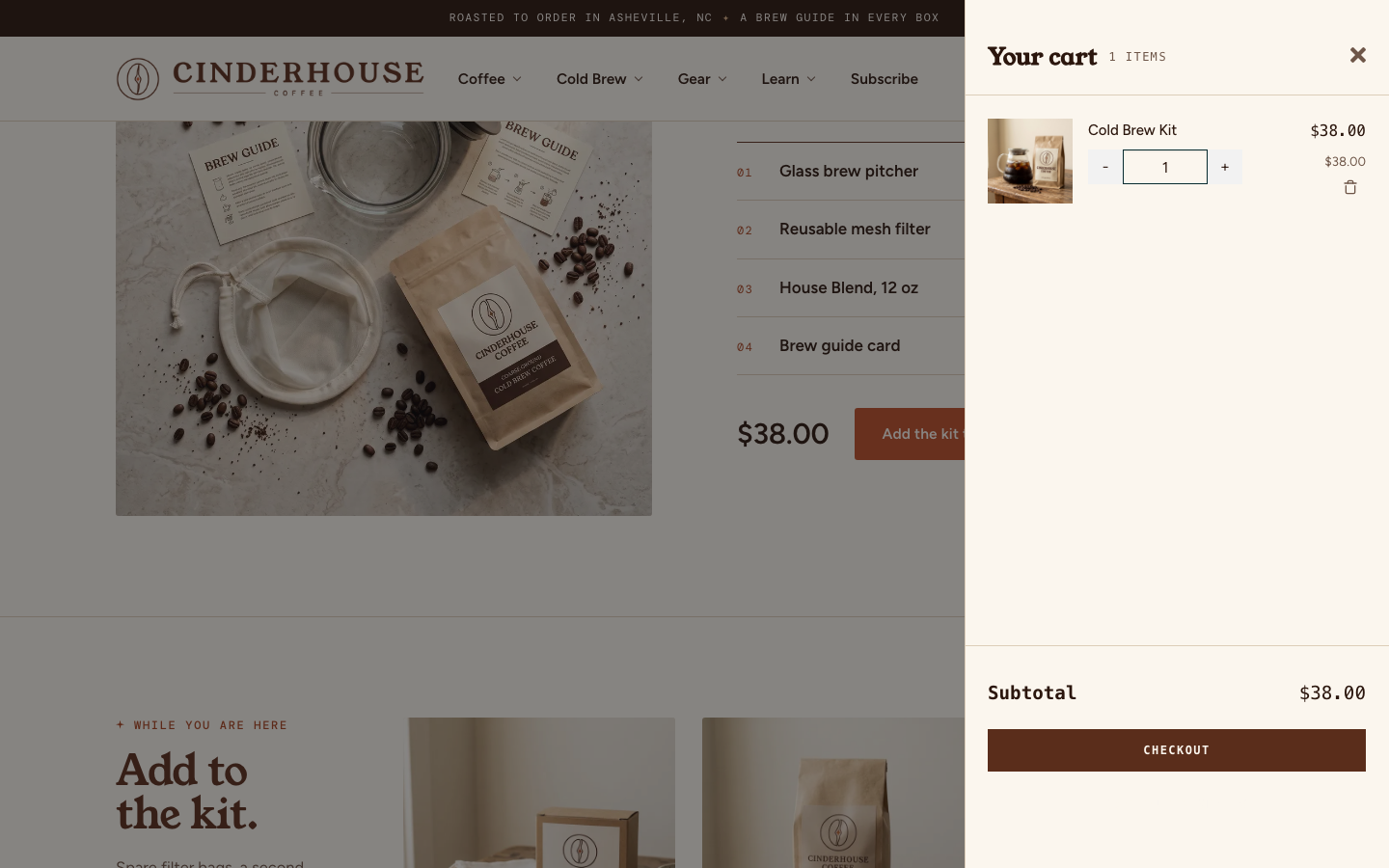
Ask for changes in plain words, such as "Make the hero text brighter." Then put the comp and the preview side by side. Your agent tells you plainly what still differs. For Cinderhouse, the comp's House Blend, Ground card became House Blend with a "Choose a grind" link, because the ground variation was not on any page of the store.
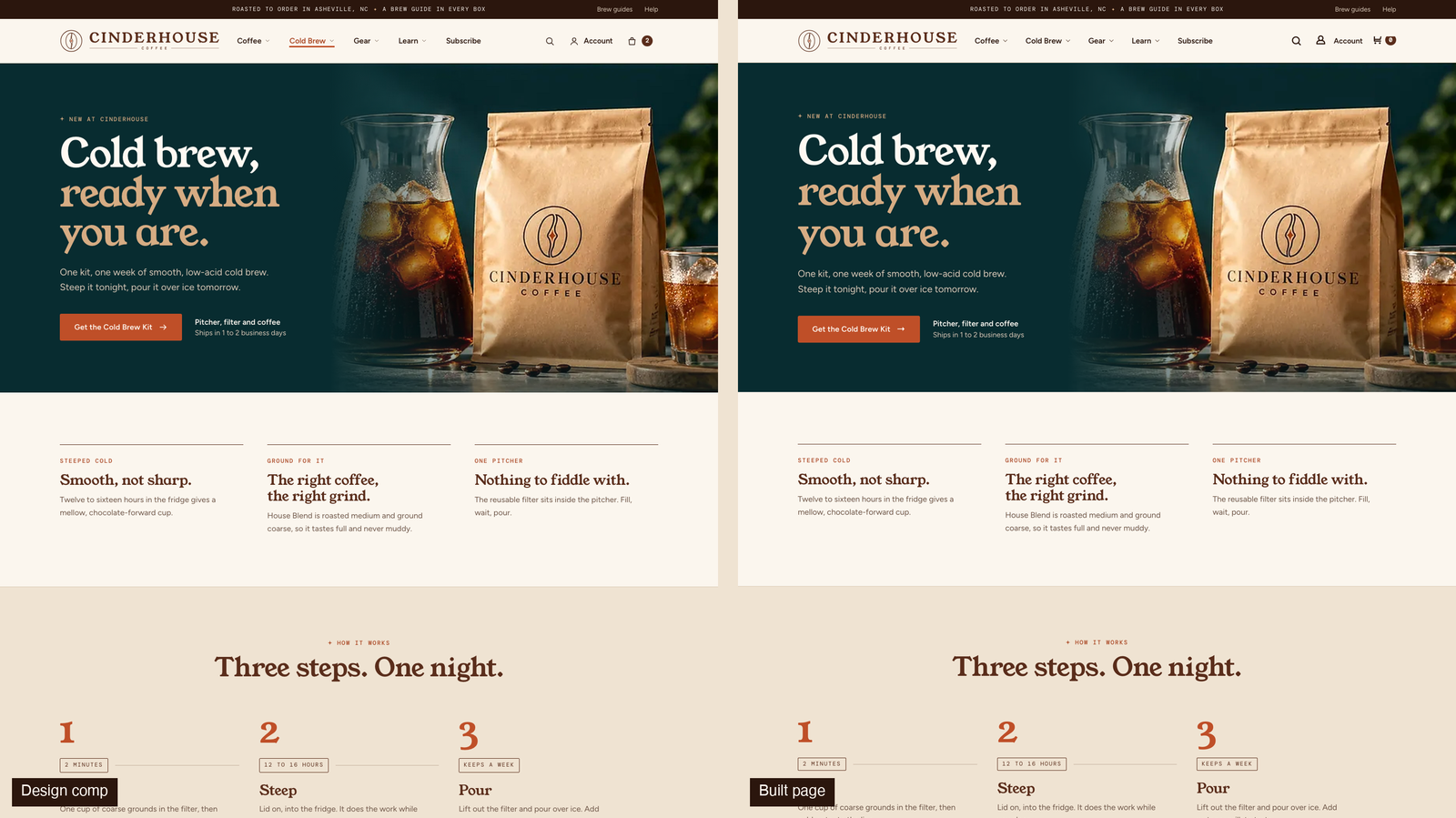
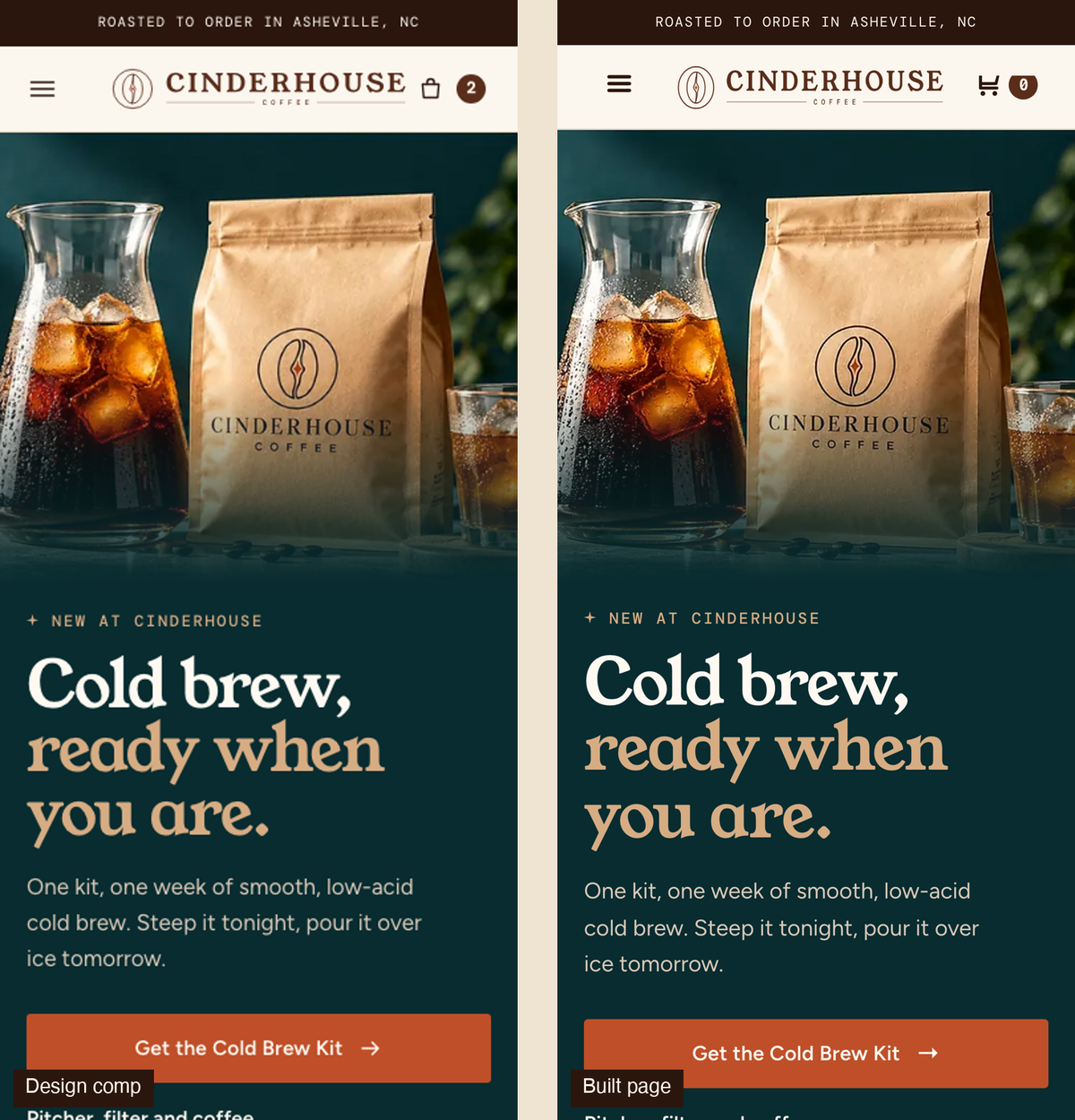
Technical details
Each preview link works once and expires after two minutes. When the body is staged on a hidden page, the command says the page "renders only inside this preview session". The comparison was made at 1440 pixels wide and 390 on a phone, with a contrast and overflow check at 360, 768, 1440 and 1920.
uc-storefront sf preview start --storefront 184481
uc-storefront sf preview stage --storefront 184481 --session <session> --theme 216631 --file body.cjson=/cold-brew-kit/body.cjson
uc-storefront sf preview open --storefront 184481 --theme 216631 --path /cold-brew-kit/ --session <session>
uc-storefront sf preview end --storefront 184481 --session <session>
Make the page visible
When the page looks right, tell your agent:
It's ready. Make the page visible and check it the way a shopper would.The page is live at once. It stays out of search engines until you ask for that to change. If you spot something later, say "Hide the page again," and it goes back to hidden while your agent fixes it.
Technical details
Showing and hiding are page settings. They need no approval, and they are live when written.
uc-storefront sf pages settings show.json --storefront 184481 --path /cold-brew-kit/ --live

    "path": "/cold-brew-kit/",
    "title": "Cold Brew Kit",
    "visible": true,
    "search": "noindex"
show.json holds {"visible": true}, and {"visible": false} hides the page again. Every save of the page body keeps a version, so sf files revert can roll the content back. Deleting a page is done in the UltraCart admin.
Live versus preview
- Preview only: the page while your agent builds it. Nothing is written.
- Live, but hidden: creating the page and saving its content.
- Live and visible: the moment you say go.
- Left alone: your theme, menus, site settings, items and every other page.
Your agent will not fire destructive actions without your consent. The safety and approvals page lists each one.
Landing page tips
- Hidden is your draft. Create a new page hidden every time, even for a small one.
- Use real products. Ask for the name, photo, price and buy button to come from the item, never typed.
- Check each product is on a page. Cinderhouse's ground variation was on no page of the store, so the agent used its parent item and said so.
- Check the in-between width. Cinderhouse's page was clean on desktop and phone, and a button ran past the edge on a tablet until the agent fixed it.
- Reload the Visual Builder after a save. The page stays editable there, and an older open copy can overwrite the new one.
Troubleshooting
- Every command stops with a location message: you are on a new network. Say, "Run the location approval," and approve it yourself with your authenticator.
- The preview link will not open: it works once. Say, "Give me a fresh preview link."
- A product is missing from the page: your agent names any item it could not find or link. Add it in the admin, then ask for a new preview.
- You want the old version back: say, "Restore the previous version of the page."
Technical details
A sign-in works only from the addresses its owner approved. From a new one, commands stop with location_approval_required until the owner approves it:
error: This sign-in hasn't been approved for use from IP <address>.
Run 'uc-storefront auth approve-location' and give the person the link and code it prints; they approve the address in UltraCart with their authenticator.
Landing page FAQ
What is an ecommerce landing page?
A page built around one product or offer, with a single main action such as add to cart.
Do I need to be technical?
No. You add a comp, paste a prompt, check a preview and say when the page goes live.
Can shoppers see the page while it is built?
No. The page is created hidden, so its address answers "not found" until you make it visible.
Why can't a page be built on an inactive theme?
A page's content belongs to no theme, so there is no inactive copy of it. Hiding the page does that job.
Will the page show up in search engines?
Not unless you ask. The prompt creates it out of search, and it stays that way after it is visible.
Can my agent delete the page later?
No. Your agent can hide a page, and deleting one is done in the UltraCart admin.
How long does it take?
Cinderhouse's took 7 minutes from the agent's first command to the saved page.
Next in the series, your agent builds a custom abandoned cart flow. Meanwhile, see how we customized one theme for three brands with AI, or explore the StoreFront Agent Toolchain.