

For years, "do I owe sales tax there?" had a simple answer: only where you had a physical presence. That changed in 2018, and the details keep moving. If you sell into more than one state, this is one area of compliance you cannot afford to guess at, because the penalties for getting it wrong compound quietly in the background.
Sales tax nexus, defined
Sales tax nexus is the connection that forces you to collect: once your business has nexus in a state, you are legally required to register, collect sales tax from buyers in that state, and remit it to the state. No nexus, no obligation. The whole game is knowing where you have it.
There are two ways to create it. Physical nexus comes from a real footprint in a state: an office, an employee, a contractor, a store, or inventory sitting in a warehouse. That last one catches a lot of sellers by surprise, because storing goods in a third-party fulfillment center or a marketplace warehouse can create physical nexus in that state on its own.
Economic nexus is the newer trigger, and it has nothing to do with a physical footprint. You create it purely by selling enough into a state. This is the standard that turned multi-state sales tax into a problem every growing online store has to manage.
Why Wayfair changed everything
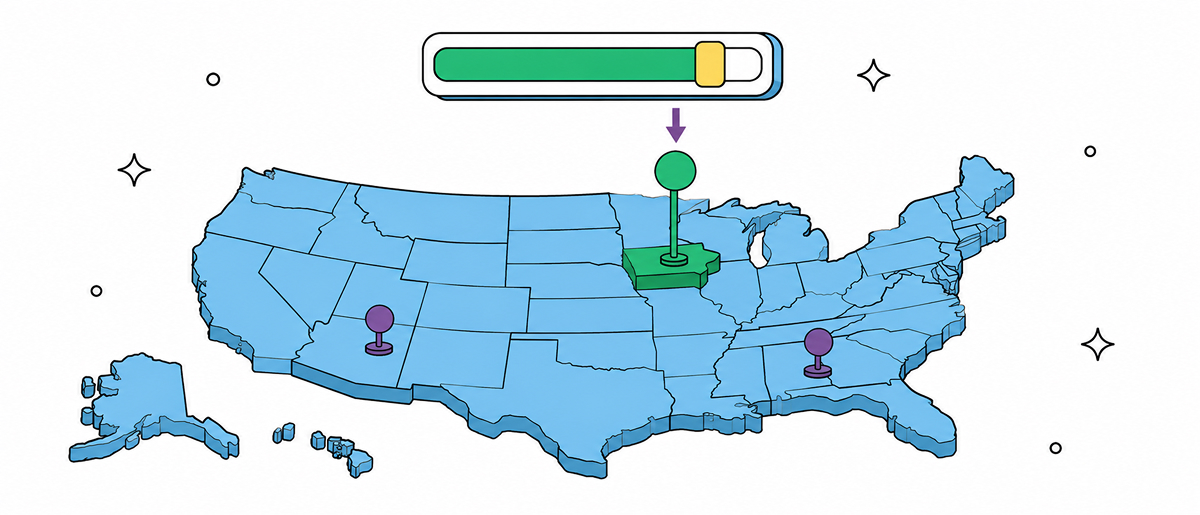
The 2018 Supreme Court decision in South Dakota v. Wayfair, Inc. let states require out-of-state sellers to collect sales tax based on economic activity alone, with no physical presence required. Within a couple of years, nearly every state with a sales tax adopted an economic nexus rule.
The mechanics are consistent even when the numbers are not. A state sets a threshold, and once your sales into that state cross it during the current or prior calendar year, you have economic nexus and the clock starts on registering and collecting.
The 2026 threshold shift
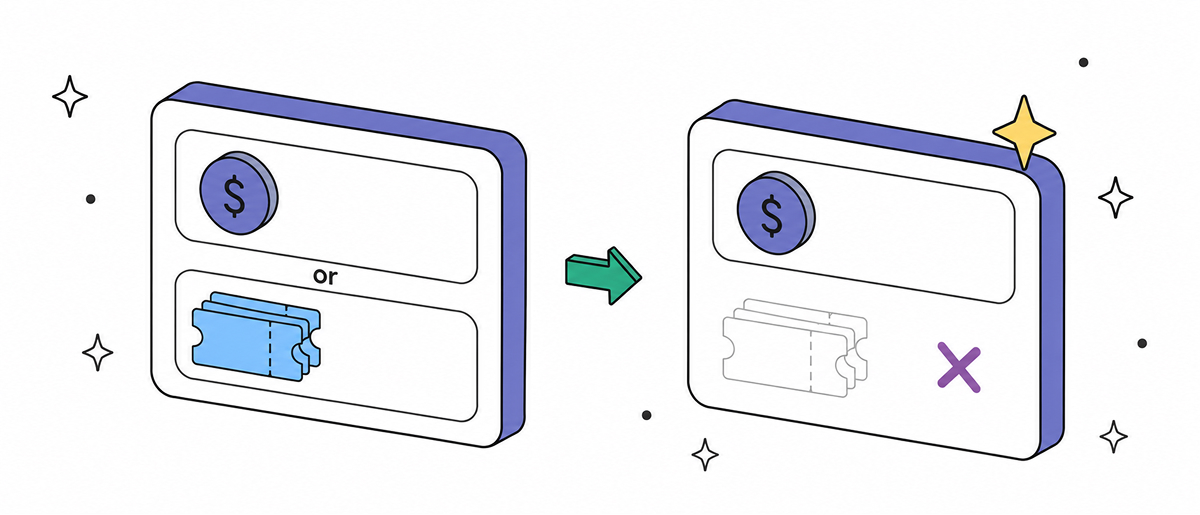
Here is the part most older guides get wrong. The common threshold is $100,000 in sales or 200 separate transactions, but the 200-transaction half of that rule is disappearing fast.
- Transaction counts are being retired: Utah removed its 200-transaction threshold in mid-2025 and Illinois removed its threshold at the start of 2026, leaving roughly 18 states that still count transactions at all.
- The big states set their own bar: California and New York use a $500,000 threshold, and Texas uses $500,000 measured over a rolling 12-month period rather than a calendar year.
- Dollars are becoming the only test: the direction is clear, and it favors smaller sellers. A store doing a high volume of low-priced orders used to trip nexus on transaction count alone, even at modest revenue. That trap is closing.
The practical takeaway: there is no single national number. You have to track your sales against each state's specific threshold, and you have to keep an eye on which states change their rules, because they do.
Marketplace facilitator rules
If you sell on Amazon, Etsy, eBay, or Walmart Marketplace, there is good news and a catch. Every state plus the District of Columbia now has a marketplace facilitator law, which means the platform is required to calculate, collect, and remit sales tax on your behalf for orders placed through it. That work is off your plate for marketplace orders.
The catch is your own threshold math: several states still count your marketplace sales toward your economic nexus total. So you can cross a state's threshold on the strength of your Amazon volume, owe a registration in that state for your direct sales, and never realize it because the marketplace was quietly handling its own collection the whole time. If you sell through both a marketplace and your own store, you have to look at the combined picture.
Know when you cross
You cannot manage nexus you cannot see. The single most useful habit is watching your sales by state against the relevant thresholds, on a rolling basis, so a state you are approaching never surprises you. UltraCart's built-in eCommerce analytics show where your orders are actually coming from, and you can push that order data into the warehouse to slice revenue by state over any window, an approach covered in our guide to UltraCart analytics and the data warehouse.
Let your tax tooling flag thresholds for you: if you connect Avalara, TaxJar, or Sovos through UltraCart, those services automatically identify new nexus points as your sales grow, so an approaching state gets surfaced instead of missed. They can also file returns for you for an additional fee, which takes deadline tracking off your plate entirely.
Tax collection in UltraCart
Once you know where you owe, turning on collection is a configuration step, not a project. From Home then Configuration (Checkout) then Sales Tax, UltraCart gives you a few ways to handle it:
- UltraCart Managed: a free, built-in option for United States collection. You select each state where you want to collect, and UltraCart applies ZIP-code-level rates at checkout. It is the fastest way to start and fits straightforward catalogs.
- Avalara, TaxJar, or Sovos: connect a dedicated tax service for street-level accuracy, product tax classifications, automatic nexus detection, and optional return filing. This is the path for higher volume or more complex tax situations.
- Self Managed: full manual control over rates for both domestic and international sales, for merchants who want to set every detail themselves.
You can also fine-tune what gets taxed per state, including whether tax applies to shipping, gift charges, and gift wrap. Your tax records then flow into your books through an accounting connection like the QuickBooks Online integration, so filing season is not a scramble. For a step-by-step walkthrough, see the UltraCart sales tax documentation.
If you are behind

Plenty of sellers read all of this and realize they crossed a threshold a year or two ago and never registered. Do not panic, but do not ignore it either. States are widening enforcement and audits as budgets tighten, and the cost of getting found grows the longer you wait.
The clean way back is a voluntary disclosure agreement, or VDA. You come forward to the state through a confidential process, and in exchange the state limits how far back it will assess tax and typically waives the penalties. The one condition that matters most: you have to come forward before the state contacts you. Once a state reaches out with questions, your leverage is gone.
The stakes are real. Left unaddressed, a state can assess several years of back taxes plus penalties that can reach 50% and interest on top. A VDA caps the lookback period and removes the penalty, which is why acting proactively almost always beats waiting to be discovered. For a complex multi-state situation, this is the moment to bring in a sales tax professional.
Build compliance into operations
Sales tax is one of those tasks that feels invisible until it is suddenly urgent. The sellers who handle it calmly are the ones who treat it as part of normal operations: clean data on where sales happen, automatic calculation at checkout, and books that stay current.
That is easier when the pieces are not scattered across half a dozen apps. UltraCart keeps analytics, checkout, and accounting connections in one platform, the same logic behind avoiding the hidden cost of plugin-based eCommerce, and you can see how the platform is priced on the pricing page.
Sales tax nexus FAQ
Does selling on Amazon mean I never owe sales tax myself?
No. The marketplace collects and remits for orders placed through it, but your marketplace sales can still count toward your economic nexus threshold in many states. If you also sell through your own store, those direct sales may create a registration obligation the marketplace does not cover.
What is the most common economic nexus threshold?
$100,000 in sales into a state during the current or prior calendar year is the most common figure. Some states add or used to add a 200-transaction trigger, though that second test is being phased out, and large states like California and New York set the bar at $500,000.
What happens if I should have registered but did not?
You can owe back taxes, penalties, and interest, and the exposure grows over time. A voluntary disclosure agreement lets you come forward, limit how far back the state looks, and usually avoid penalties, as long as you act before the state contacts you.
How do I handle tax-exempt customers?
For wholesale, resale, or government buyers, you can mark a customer as tax exempt so sales tax is removed from their orders regardless of location. UltraCart also stores a customer Tax ID Number and the matching exemption codes for Avalara, TaxJar, and Sovos. Keep your exemption certificates on file before enabling it, and see tax configuration and exemptions for the details.
Do I have to register in all 50 states?
Only where you have nexus. Most sellers have it in a handful of states at first, expanding as their sales grow. Registering everywhere before you have an obligation creates filing work with no benefit, so track your sales by state and register as you cross each threshold.
Sales tax nexus is not the most exciting part of running an online store, but it is one of the cleanest to get ahead of. Watch where your sales are landing, collect where you are required to, and fix any gaps with a voluntary disclosure before a state finds them. See how UltraCart brings your store data, checkout, and reporting together so the compliance side stays quiet.